
Master Cooking Methods for Maximum Nutrition
Learn how different cooking techniques preserve or enhance the nutritional value of your food. Discover science-backed methods that keep vitamins, minerals, and antioxidants intact.
The information on this site is for educational purposes only and does not constitute medical advice. Always consult a qualified healthcare professional before making health decisions.
Why Cooking Methods Matter
The way you prepare food fundamentally impacts its nutritional profile. Heat, moisture, and cooking duration can either preserve or diminish vital nutrients your body needs. Understanding these principles transforms you into a smarter, more health-conscious cook.
Different cooking methods work differently for different foods. Some vegetables release beneficial compounds when heated, while others lose heat-sensitive vitamins. Proteins respond uniquely to temperature, and fats can change their structure entirely based on how they're treated.
- Retain Vitamins: Learn which methods preserve heat-sensitive B vitamins and vitamin C
- Maximize Absorption: Some nutrients become more bioavailable when cooked properly
- Avoid Harmful Compounds: Understand how to minimize formation of unwanted byproducts
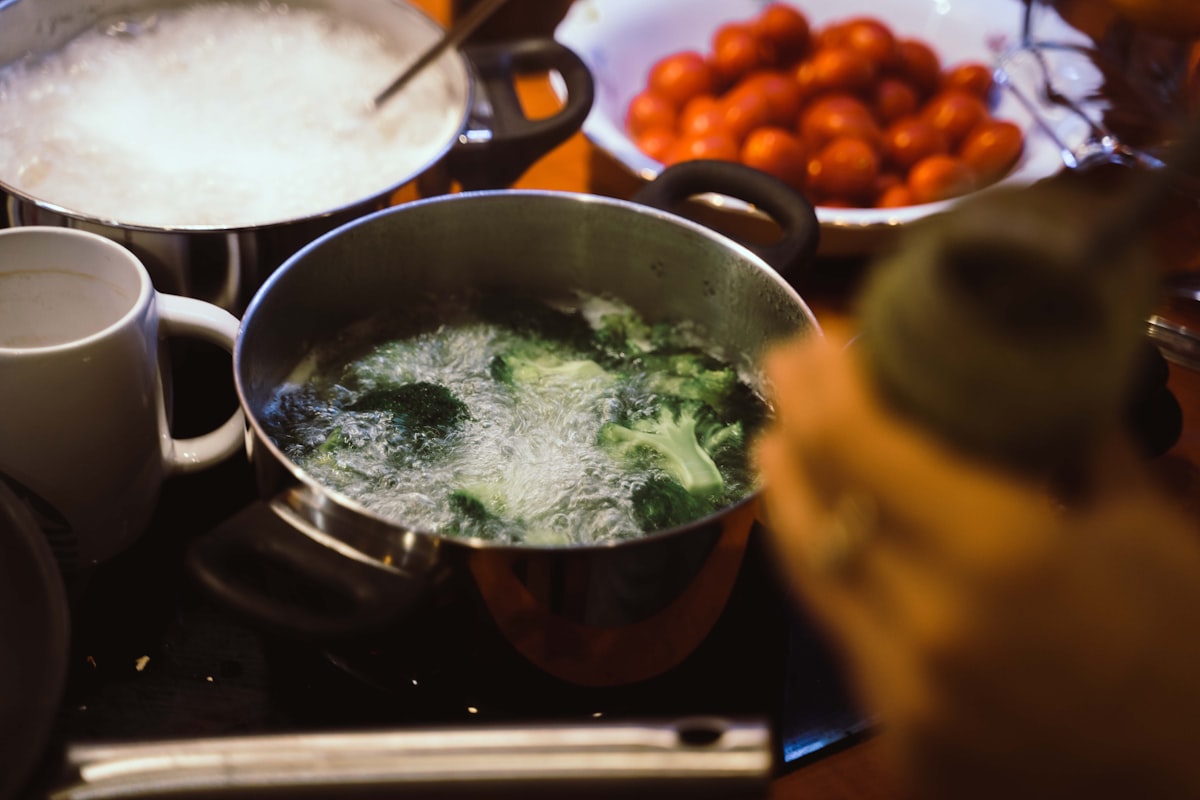
Four Primary Cooking Methods Comparison
Steaming
Gentle moist heat without direct contact with boiling water preserves water-soluble vitamins and maintains vegetable texture.
Best For:
Broccoli, leafy greens, root vegetables, fish, chicken breasts
Nutrient Retention:
85-95% of vitamins preserved
Roasting
High, dry heat that caramelizes vegetables and proteins, enhancing flavor and making certain nutrients more accessible.
Best For:
Root vegetables, Brussels sprouts, bell peppers, chicken, salmon
Nutrient Retention:
75-85% of vitamins preserved
Sautéing
Quick cooking in minimal fat at moderate-high heat that preserves texture while making fat-soluble vitamins more bioavailable.
Best For:
Leafy greens, mushrooms, garlic, onions, quick-cooking vegetables
Nutrient Retention:
80-90% of vitamins preserved
Boiling
Submersion in hot water is quick and convenient but leaches water-soluble nutrients into cooking liquid. Use sparingly.
Best For:
Pasta, grains, potatoes (retain water), legumes
Nutrient Retention:
50-70% of vitamins (lowest retention)
Core Features of Smart Cooking
Temperature Control
Precise heat management prevents nutrient destruction. Lower temperatures for longer periods can achieve similar results to high-heat cooking with better preservation of heat-sensitive vitamins like B vitamins and vitamin C.
- Avoid excessive temperatures above 100°C when possible
- Use gentle simmering instead of rapid boiling
- Monitor cooking time closely
Minimal Water Contact
Extended soaking or boiling causes water-soluble nutrients (vitamins B and C, minerals) to leach into cooking liquid. Steaming and sautéing minimize this loss significantly compared to prolonged boiling.
- Steam vegetables instead of boiling
- Use minimal water when cooking grains
- Save cooking water for broths and soups
Optimal Cooking Time
Cooking just until tender maintains structural integrity and nutrient content. Overcooked foods lose more vitamins and minerals while developing undesirable texture and flavor compounds.
- Cook vegetables until just tender-crisp
- Don't overcook grains or legumes
- Use visual and tactile cues over strict timing
Nutrient Pairing
Combine foods strategically to enhance nutrient absorption. Fat-soluble vitamins (A, D, E, K) absorb better with dietary fats. Vitamin C-rich foods enhance iron absorption from plant sources.
- Add olive oil to cooked vegetables
- Pair beans with citrus or tomatoes
- Cook leafy greens with healthy fats
Smart Preparation
How you prepare food before cooking matters. Keeping skins on when appropriate, minimizing cutting, and timing your prep close to cooking reduces oxidation and nutrient loss.
- Leave skins on potatoes and vegetables
- Cut just before cooking when possible
- Minimize soaking in water
Food Combination Science
Certain cooking combinations unlock or enhance nutrients. Cooking tomatoes with oil increases lycopene availability. Pairing different proteins and vegetables creates nutritionally complete meals.
- Roast tomatoes with olive oil
- Cook carrots with fat for beta-carotene
- Combine complementary proteins
Your Cooking Technique Guide
Select Your Cooking Method Based on Food Type
Not all foods respond equally to each method. Delicate vegetables and fish benefit from gentle steaming or poaching. Hearty root vegetables develop deeper flavors and nutrient complexity through roasting. Leafy greens release minerals when quickly sautéed with oil. Match the method to the ingredient for optimal results.
Pro tip: Broccoli and leafy greens: steam (preserves water-soluble vitamins). Root vegetables: roast with skin (caramelizes, enhances flavor, maintains minerals). Quick-cooking items: sauté briefly over medium-high heat.
Prepare Food Strategically
Minimize nutrient loss during preparation. Cut vegetables immediately before cooking to reduce oxidation. Keep skins on whenever possible—potato skins contain significant fiber and minerals. For root vegetables and peppers, the nutrient density is highest near the outer layers. Don't pre-soak vegetables unless absolutely necessary, as this leaches water-soluble vitamins.
Pro tip: Prep your mise en place (ingredients prepared and ready) just 5-10 minutes before cooking. This minimizes the time nutrients are exposed to air.
Control Temperature Precisely
Use the right heat level for your chosen method. Steaming requires 100°C (just at boiling point). Sautéing works best at medium-high heat (around 160-180°C), hot enough to cook quickly but not so hot that it smokes and damages nutrients. Roasting typically uses 200-220°C, which caramelizes while preserving mineral content. Avoid temperatures above 240°C, which can create harmful compounds.
Pro tip: Invest in a good thermometer. Many nutrients are destroyed at specific temperature thresholds you can't always see or judge by feel.
Cook to Optimal Doneness
The goal is tender but not mushy—this is where maximum nutrient retention meets optimal texture and taste. For vegetables, aim for tender-crisp: they should yield to a fork but still have slight resistance. For grains and legumes, cook until just soft enough to eat comfortably. Slightly undercooked is better than overcooked from a nutrition standpoint. Use visual cues and taste tests rather than strict timing.
Pro tip: Pierce vegetables with a fork to test doneness. They should be tender but the fork should encounter slight resistance, not glide through easily.
Combine with Complementary Foods
Enhance nutrient absorption through strategic pairing. Add healthy fats (olive oil, avocado, nuts) to cooked vegetables to increase absorption of fat-soluble vitamins A, D, E, and K. Pair plant-based iron sources with vitamin C-rich foods to enhance iron bioavailability. Combine different protein sources to create complete amino acid profiles. This final step transforms good cooking into truly nutritional eating.
Pro tip: A simple roasted vegetable plate becomes more nutritious when drizzled with quality olive oil and finished with lemon juice or fresh herbs.
Nutrient Retention by Method
| Food / Nutrient | Steaming | Roasting | Sautéing | Boiling |
|---|---|---|---|---|
| Broccoli - Vitamin C | 90% | 75% | 88% | 45% |
| Spinach - Folate (B9) | 88% | 80% | 85% | 50% |
| Carrots - Beta-carotene | 92% | 95%* | 93% | 80% |
| Potatoes - Minerals (K, Mg) | 89% | 94% | 91% | 75% |
| Bell Peppers - Vitamin C | 95% | 98% | 96% | 88% |
| Blueberries - Antioxidants | 92% | 97% | 93% | 85% |
What Our Community Says

Sarah M.
Fitness Coach
"Vitalmindnutrition's guidance transformed my approach to nutrition. My energy levels are through the roof, and my clients have noticed the difference in my coaching!"

James T.
Entrepreneur
"I was skeptical at first, but the science-backed recommendations are incredible. Better focus, better sleep, better results. Highly recommend!"

Emma L.
Health Consultant
"The personalized meal plans are a game-changer. No more guessing—just results. My clients are seeing measurable improvements in weeks!"
Frequently Asked Questions
How personalized are the nutrition plans?
Each plan is customized based on your lifestyle, dietary preferences, fitness goals, and medical history. Our AI-powered system analyzes your data to create a plan uniquely suited to you.
Can I follow the plans if I have dietary restrictions?
Absolutely! We support vegan, vegetarian, keto, gluten-free, paleo, and allergen-specific diets. You can customize your preferences in your profile.
How long before I see results?
Most users report improved energy and digestion within 2-3 weeks. Visible physical changes typically appear within 6-8 weeks with consistent adherence to the plan.
What kind of support is available?
We offer 24/7 chat support, weekly coaching calls with certified nutritionists, community forums, and personalized email guidance. You're never alone on your journey.
Is there a money-back guarantee?
Yes! We offer a 30-day full money-back guarantee. If you're not satisfied with your results, we'll refund you—no questions asked.
Can I track my progress with an app?
Of course! Our mobile app (iOS & Android) lets you log meals, track macros, get real-time notifications, and sync with fitness devices for holistic health monitoring.
Ready to Transform Your Nutrition?
Join thousands of members who've discovered the power of science-backed, personalized nutrition. Start your journey today and experience the Vitalmindnutrition difference.
100% Secure • 30-Day Money-Back Guarantee • No Credit Card Required for Trial